

Super Yellow Ram
Super Yellow Ram
Low stock
Couldn't load pickup availability
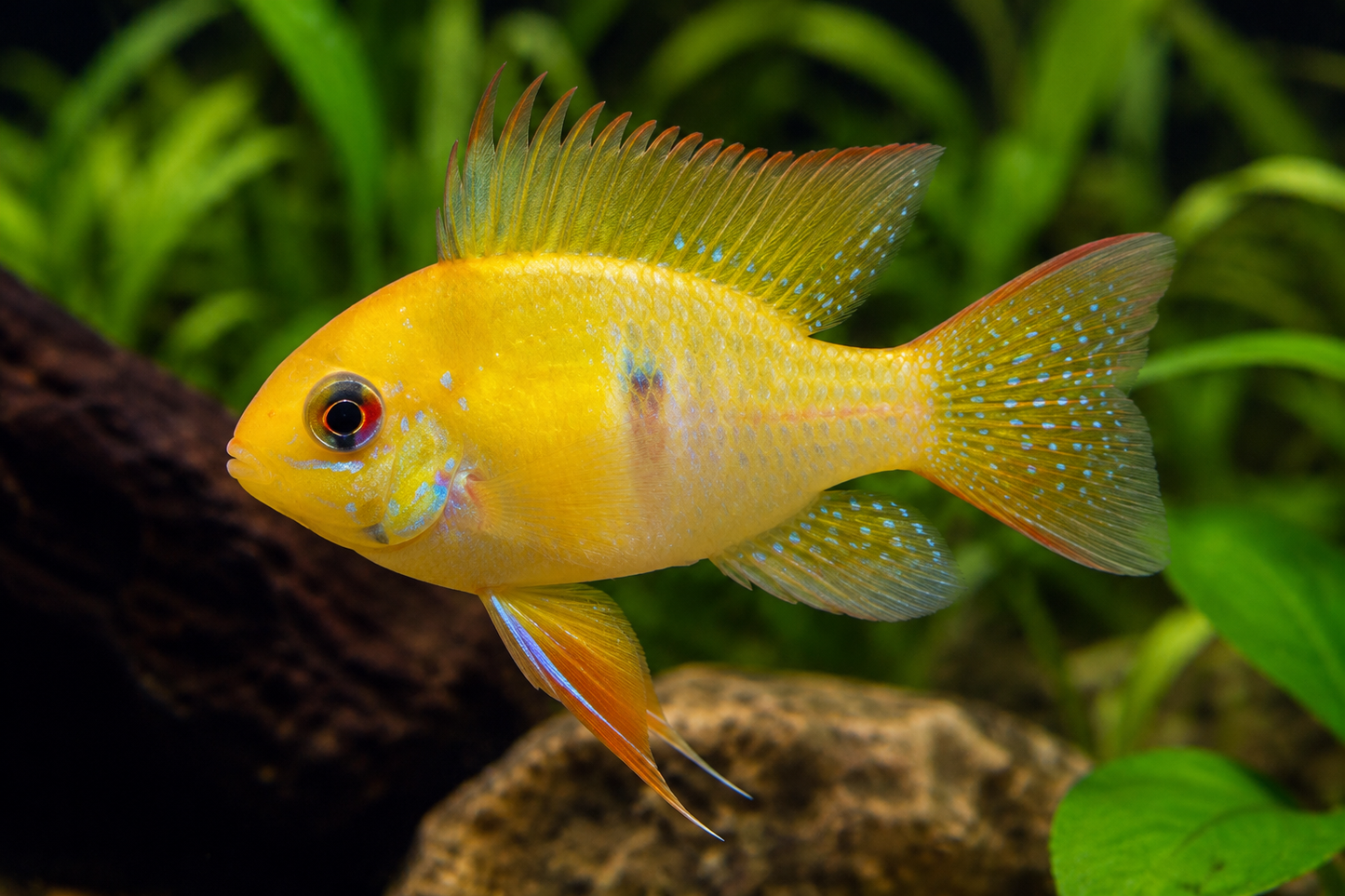
Super Yellow Ram – Golden Dwarf Cichlid (Mikrogeophagus ramirezi)
Bring vibrant colour and personality to your freshwater aquarium with the Super Yellow Ram, a stunning selectively bred colour variety of Mikrogeophagus ramirezi. Also commonly searched for as a Yellow Ram, Golden Ram, Gold Ram, Yellow German Ram, or Golden German Blue Ram, this beautiful South American dwarf cichlid is known for its intense golden-yellow body, attractive fins and subtle iridescent blue markings.
Compact, colourful and full of personality, Super Yellow Rams are an excellent feature fish for warm tropical planted aquariums. Their small adult size makes them suitable for appropriately sized community aquariums, while their interesting behaviour makes them especially rewarding for aquarists looking for something more distinctive than standard community fish.
Why Choose a Super Yellow Ram?
The Super Yellow Ram combines the personality of a cichlid with a relatively small adult size. Unlike many larger cichlid species, Rams can be kept in peaceful community aquariums when provided with suitable tankmates and enough territory.
Their brilliant yellow coloration looks particularly impressive against green aquarium plants, dark substrate, driftwood and natural aquascapes.
Super Yellow Ram Care Guide
-
Scientific Name: Mikrogeophagus ramirezi
-
Common Names: Super Yellow Ram, Yellow Ram, Golden Ram, Gold Ram, Yellow German Ram
-
Fish Type: Freshwater dwarf cichlid
-
Adult Size: Approximately 5–7 cm
-
Temperament: Generally peaceful; may become territorial when breeding
-
Recommended Temperature: Approximately 27–30°C
-
Diet: Omnivore
-
Swimming Level: Mid to bottom
-
Care Level: Intermediate
-
Aquarium Type: Tropical freshwater / planted community aquarium
-
Origin: Mikrogeophagus ramirezi originates from the Orinoco River basin in South America; Super Yellow Rams are selectively bred aquarium varieties.
Aquarium Setup
Super Yellow Rams thrive in a warm, mature and well-maintained freshwater aquarium with stable water conditions. They appreciate a natural environment containing live plants, driftwood, rocks, caves and sheltered areas.
A soft sand or fine substrate is a great choice, particularly because Rams naturally spend time exploring and feeding close to the bottom of the aquarium.
Good filtration and regular aquarium maintenance are important. Rams can be more sensitive to poor or unstable water quality than hardy beginner fish, so they are best introduced into an established, fully cycled aquarium.
Avoid sudden changes in temperature or water chemistry.
Super Yellow Ram Tank Mates
Super Yellow Rams can make excellent community aquarium fish when housed with peaceful species that enjoy similar warm-water conditions.
Potential tankmates can include compatible:
-
Tetras
-
Rasboras
-
Corydoras
-
Peaceful small catfish
-
Other calm tropical community fish
Avoid keeping them with highly aggressive or very boisterous species. Rams can also become more territorial when forming pairs, spawning or protecting eggs and fry, so providing visual barriers and separate territories is beneficial.
Always consider the adult size, temperament, water requirements and available aquarium space of every species before combining fish.
Can Super Yellow Rams Live With Shrimp?
Adult shrimp may coexist with Rams in heavily planted aquariums, but Super Yellow Rams are not considered completely shrimp-safe.
Small shrimp, juvenile shrimp and newly hatched shrimplets may be eaten if the fish can catch them. If your main goal is breeding Cherry Shrimp, Neocaridina or other dwarf freshwater shrimp, a dedicated shrimp aquarium will provide much better survival rates.
Dense Java moss, plants, rocks, driftwood and small hiding spaces can help provide additional cover, but they cannot guarantee shrimplet survival.
What Do Super Yellow Rams Eat?
Super Yellow Rams are omnivores and should receive a varied, high-quality diet.
Suitable foods include:
-
Quality tropical or dwarf cichlid pellets
-
Small sinking or slow-sinking granules
-
Flake food
-
Frozen brine shrimp
-
Frozen or live bloodworms
-
Daphnia
-
Other appropriately sized aquarium foods
Providing several different foods helps maintain good body condition and coloration. Feed appropriately sized portions and avoid leaving excessive uneaten food in the aquarium.
Behaviour & Personality
One of the reasons aquarists love Rams is their personality. Super Yellow Rams actively explore their surroundings, investigate the substrate and interact with other fish.
They are generally peaceful compared with many larger cichlids, although they are still cichlids and can display territorial behaviour. This is particularly noticeable when a male and female form a pair and begin breeding.
Providing caves, plants, rocks and driftwood helps create natural territorial boundaries and gives fish places to retreat when needed.
Male vs Female Super Yellow Ram
Sexing young Super Yellow Rams can be difficult, and differences become easier to identify as the fish mature.
Males generally develop a larger body and more extended fins, while mature females may remain slightly smaller and can develop a fuller abdomen. However, selective breeding and individual variation can make visual sexing unreliable, particularly with juvenile fish.
Unless specifically stated, a particular sex or breeding pair is not guaranteed.
Breeding Super Yellow Rams
Super Yellow Rams are pair-forming dwarf cichlids and may breed in suitable aquarium conditions. A compatible pair may select a flat rock, substrate or another suitable surface for spawning.
During breeding, both parents can become territorial while defending their spawning area, eggs and fry. Aquariums intended for breeding should therefore provide suitable spawning surfaces, hiding places and enough space for the pair to establish a territory.
Are Super Yellow Rams Beginner Friendly?
Super Yellow Rams are best suited to aquarists who already understand basic aquarium cycling, water quality and regular maintenance.
They are generally more sensitive to unstable conditions than hardy beginner species such as guppies and some common community fish. A fully cycled aquarium, stable warm temperature, good filtration and consistent water quality will give them the best chance of thriving.
A Stunning Centrepiece for a Tropical Aquarium
With their intense golden-yellow coloration, compact size and fascinating cichlid behaviour, Super Yellow Rams make an eye-catching addition to suitable freshwater planted and community aquariums.
Whether you're creating a South American-inspired aquascape or simply looking for a colourful small freshwater feature fish, the Super Yellow Ram offers an impressive combination of beauty and personality.
Important: Please research compatibility and water requirements before purchasing any livestock. Aquarium conditions can vary, and compatibility between individual fish cannot be guaranteed.
Images are for reference only. Livestock is naturally variable, so the size, colour, pattern, fin shape and appearance of the fish you receive may differ from the fish pictured.
More Information
How to Take Care The Shrimps
Taking care of Freshwater aquarium Shrimps (Neocaridina and Caridina) involves providing them with a suitable environment and proper attention to their specific needs. Here are some essential care guidelines:
1. Tank Setup:
- Shrimp are relatively small and can be kept in tanks as small as 5 gallons (19 liters), but a larger tank allows for more stable water conditions.
- Provide hiding spots with plants, driftwood, and rocks. Live plants like Java Moss and Java Fern are ideal as they serve as both hiding places and a food source.
2. Water Parameters:
For Neocaridinar (Cherry Shrimps)
- Temperature: 72-78°F (22-28°C)
- pH: 6.5-7.5
- GH (General Hardness): 6-10
- KH (Carbonate Hardness): 3-10
For Caridina (Taiwan bee, Crystal Shrimps)
- Temperature: 72-78°F (22-26°C)
- pH: 6.0-6.5
- GH (General Hardness): 3-5
- KH (Carbonate Hardness): 0-10
3. Filtration:
- Use a sponge filter such as Qanvee filter or a gentle flow filter to avoid strong currents that can stress shrimp.
4. Feeding:
- Shrimp are omnivores and feed on algae, biofilm, and commercial shrimp pellets.
- Supplement their diet with blanched vegetables like Mulberry leaves, spinach or zucchini.
- Offer a varied diet to ensure proper nutrition.
5. Water Changes:
- Perform regular water changes (10-20% weekly) to maintain water quality.
- Use dechlorinated water at the same temperature and parameters as the tank.
6. Molting:
- Provide a calcium source, such as our shrimp mineral products or crushed coral, cuttlebone, to support molting.
7. Tank Mates:
- Shrimp are generally peaceful but can be preyed upon by larger fish.
- Suitable tank mates include small, non-aggressive fish like guppies or endlers.
- Avoid aggressive or predatory species.
8. Breeding:
- Shrimp breed readily in captivity.
- Provide moss or other dense plant growth for shrimp to hide their eggs.
- Maintain stable water conditions to encourage breeding.
9. Health and Observation:
- Regularly observe your Shrimp for signs of stress, illness, or abnormal behavior.
- Quarantine new arrivals to prevent introducing diseases.
10. Patience:
- Shrimp keeping can be rewarding but requires patience. Allow your aquarium to mature and stabilize before adding shrimp.
By following these care guidelines, you can create a thriving environment for your Shrimp and enjoy their vibrant colors and fascinating behavior in your aquarium.
How to Acclimate New Shrimps & Fish
Acclimating new aquarium shrimp/fish is crucial to ensure a smooth transition and minimize stress. Follow these steps for proper acclimation:
Materials Needed:
- A container or bucket.
- An airline tube or a slow-drip system (optional).
- A net.
Procedure:
- Turn Off Lights: Dim the aquarium lights or turn them off completely to reduce stress on the shrimp/fish.
- Float the Bag: Place the sealed bag containing the shrimp on the surface of the aquarium water. This allows the water inside the bag to gradually adjust to the tank temperature.
- Drip Acclimation (Optional): If you have an airline tube or a slow-drip system, set it up to provide a gentle flow of water from the tank into the bag. This method is slower but provides a more gradual transition. Adjust the flow rate to about 2-4 drops per second.
- Monitor Temperature: Ensure the water temperature inside the bag matches the tank temperature after about 15-20 minutes. This step is essential to prevent temperature shock.
- Open Bag and Add Tank Water: Carefully open the bag without allowing shrimp to escape. Using a net or your hand, gently transfer the shrimp into a clean container or bucket. Be cautious not to introduce water from the bag into the container.
- Gradual Water Exchange: Over the course of about 30 minutes to an hour, gradually add small amounts of aquarium water to the container with the shrimp/fish. This helps the shrimp adjust to the tank's water parameters.
- Net Transfer: After acclimation, use a net to transfer the shrimp from the container into the main aquarium. Avoid adding any water from the acclimation container into the tank.
- Dispose of Bag Water: Safely dispose of the water from the bag. Do not release it into your aquarium, as it may contain contaminants or pathogens.
- Observe and Monitor: Keep an eye on the newly introduced shrimp/fish for the next few hours to ensure they adapt well to their new environment. Monitor their behavior and look for any signs of stress or illness.
Proper acclimation helps reduce the risk of shock and ensures a smoother transition for your new aquarium creatures. It's an essential step in ensuring their health and well-being in your tank.
Shipping & DOA Policy
- Concerned about purchasing livestock online? Rest assured, we ship shrimps and other livestock to every corner of NSW, VIC, QLD, and SA weekly, ensuring their safe and healthy arrival. Our Dead on Arrival (DOA) policy is applied to all orders, guaranteeing your peace of mind.
- Shrimps are carefully packed in a styrofoam box and shipped every Monday/Tuesday/Wednesday early morning to avoid weekend delays. Delivery times generally range from 1 to 3 business days depending on your location.
- To initiate DOA claims, we kindly ask buyers to contact our dedicated support team either via email at aushrimphome@gmail.com or directly through our website's chat feature. In order to expedite a swift resolution, which may involve resending a new package, issuing a refund, or providing credit for a future order, we kindly request that buyers submit a clear photo of the deceased shrimp(s) inside the unopened bag within a maximum of 1 HOUR from the moment of Australia Post delivery. Your timely communication is pivotal in enabling us to promptly address any concerns and uphold our unwavering commitment to ensuring your satisfaction.
Important Notes Before Buying
- Please note that our ornamental shrimps are small, with a maximum size of around 2cm. When purchasing, you'll typically receive juveniles or sub-adults measuring approximately 0.8-1.5cm, which may display less vibrant coloration than adults. However, rest assured that they originate from the same colony and offer excellent value for your investment.
- To ensure the well-being of your shrimp/fish upon arrival, please follow the tracking number and acclimate them by slowly adding tank water to their bag/container for about one hour. This gradual transition helps them adapt to new water parameters and temperatures.
- The images featured on our website showcase the exceptional individuals and actual shrimps/fish thriving at our facility. However, please keep in mind that as living organisms, we cannot guarantee that the shrimp/fish you purchase will be identical in color and size. Keep in mind that shipping stress may temporarily affect the shrimp's coloration, especially neocaridina species, which can become pale and translucent. However, their colors will return to their vibrant state within a few days under suitable water conditions.
- Our pricing is based on current stock levels and market rates in Australia. We regularly adjust our prices to provide our customers with the most competitive rates available.
- If you encounter any issues with the color or quality of the shrimp/fish, please don't hesitate to reach out. We are committed to assisting and resolving any concerns. Thank you for your trust and support!